50 Tasks on Your List? Here's How to Pick the One That Matters
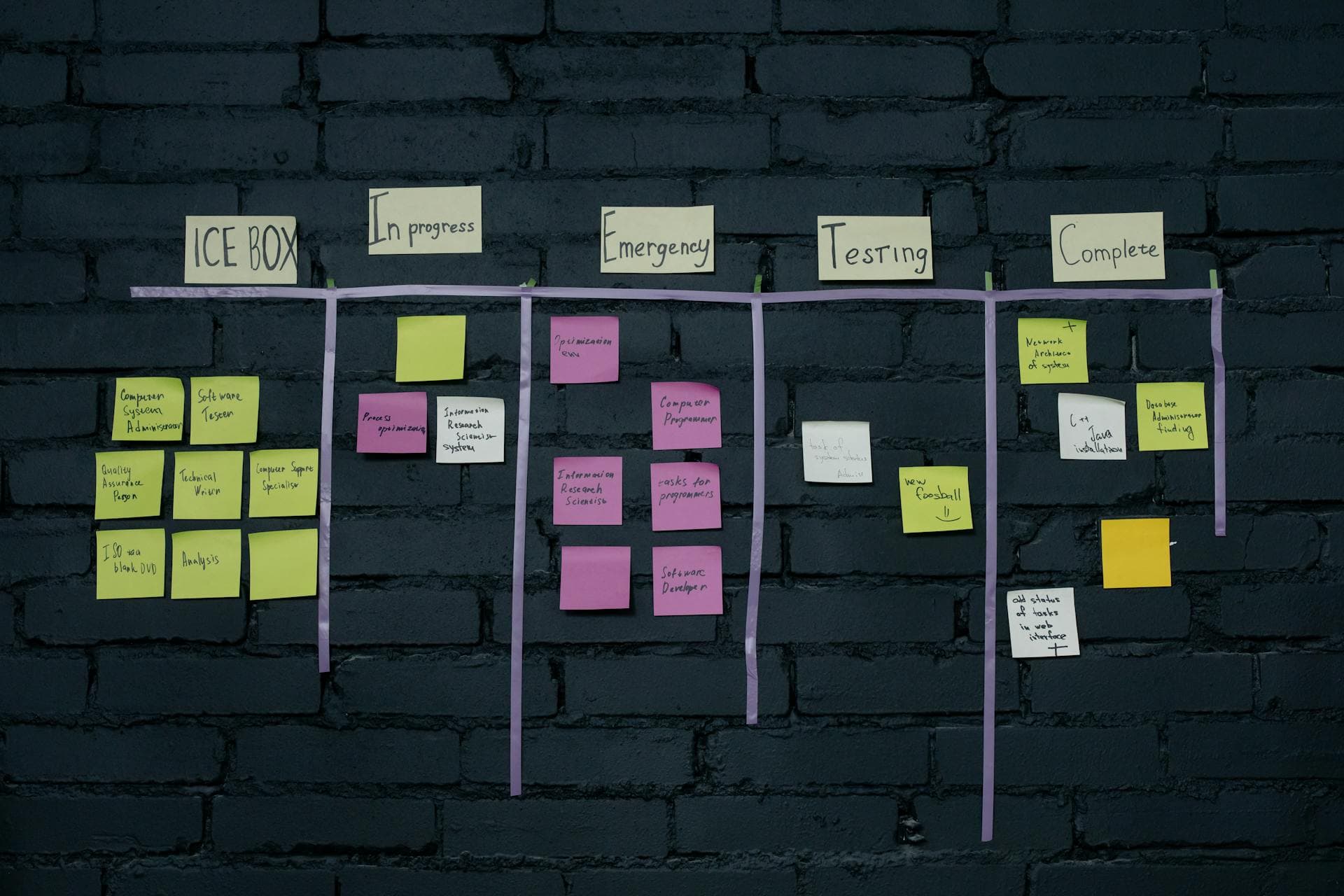
You open your task manager and see 50 items staring back at you. Some are overdue. Some have vague deadlines like "soon" or "when you get a chance." A few are genuinely important, but they're buried between "reply to that email from Tuesday" and "research that thing someone mentioned in a meeting."
So you do what anyone would do. You pick something easy, knock it out for a quick dopamine hit, and feel productive for approximately four minutes. Then you look at the list again. Still 49 items. Still no clarity.
This is the task paralysis trap, and it's one of the biggest reasons capable people underperform. The problem isn't laziness or poor work ethic. It's that a flat list of 50 items offers zero guidance about what actually matters.
Why Long Task Lists Create Paralysis
A task list is supposed to be a productivity tool. But past a certain length, it becomes the opposite — a source of anxiety and avoidance.
Research in behavioral psychology calls this the paradox of choice. When presented with too many options, people make worse decisions or avoid deciding altogether. Barry Schwartz documented this extensively: more choices lead to more regret, more second-guessing, and more inaction.
Your task list is a choice problem. Every time you look at it, your brain has to evaluate 50 options, weigh their relative importance, estimate effort, and decide what to do next. That's cognitively expensive. By the time you've mentally sorted through the list, you've already burned willpower you could have spent on actual work.
The other issue is emotional. A long list feels like a backlog of failures — things you should have done already. Each item carries a tiny charge of guilt. Multiply that by 50 and you've got a list that makes you feel worse every time you look at it.
The Real Problem: No Sorting Mechanism
Here's what nobody tells you about task management: capturing tasks is easy. Sorting them is the skill that matters.
Most productivity advice focuses on getting things out of your head and into a system. That's step one. But it's only useful if the system helps you decide what to do next. A list of 50 unsorted items is just your anxiety in written form.
What you need is a filter — a way to quickly separate the essential from the optional. Not a complex scoring system. Not a multi-factor weighted matrix with color coding. Something you can apply in 10 minutes that tells you: "Do this first. Do this second. Ignore the rest for now."
The Two-Question Filter That Cuts Through the Noise
Every task on your list can be evaluated with two questions:
-
Is this urgent? — Does it have a real deadline with real consequences? Not "someone might follow up," but "something breaks or someone loses something if this doesn't happen soon."
-
Is this important? — Does it connect to your actual goals? Not "it would be nice to do" but "this directly advances something I care about."
These two questions create four categories:
- Urgent and Important — Do these now. They're your fires and your hard deadlines. But be honest: most people have 3-5 of these at any time, not 25.
- Important but Not Urgent — Schedule these. They're the high-value work that keeps getting pushed because nothing is forcing your hand today.
- Urgent but Not Important — Delegate or speed-run these. They need to happen soon, but they don't need your best thinking. Batch them.
- Neither — Be brave. Delete them, archive them, or move them to a "someday" list where they can't clutter your active view.
This is the Eisenhower Matrix in action, and it works because it's binary. You're not ranking 50 items on a scale of 1 to 10. You're answering two yes-or-no questions per task. That's it.
How to Triage 50 Tasks in 15 Minutes
Set a timer. This should feel fast, not like a planning session. Speed matters because overthinking is the enemy here.
Step 1: Scan and eliminate (3 minutes). Go through your list and immediately remove anything that's been sitting there for over a month without action. If it's been a month and you haven't done it, one of two things is true: it's not important, or you're avoiding it for a reason that needs addressing separately. Either way, it doesn't belong on your daily task list.
Step 2: Flag the truly urgent (3 minutes). Mark anything with a hard deadline in the next 7 days. "Hard" means external consequences — not self-imposed guilt deadlines. You'll probably flag 5-8 items. If you're flagging more than 10, your definition of urgent is too loose.
Step 3: Star the truly important (3 minutes). Ignore urgency for a moment. Which tasks, if completed, would have the biggest impact on your goals this month? Star your top 5. These might overlap with your urgent items, or they might not.
Step 4: Build your "today" list (3 minutes). Your working list for today should have 3-5 items. Pull from urgent-and-important first, then important-but-not-urgent if you have capacity. Everything else stays in the backlog.
Step 5: Accept the rest (3 minutes). Look at the remaining 40+ items. They're not going anywhere. But they're also not your problem today. Give yourself permission to ignore them until your next weekly review.
The "Pick One" Rule for Stuck Moments
Even with a short list, you might hit moments where you can't decide between three items. When that happens, use the pick one rule: choose the task that, if completed, would make the other tasks easier or unnecessary.
This is a concept from Gary Keller's The One Thing: "What's the one thing I can do, such that by doing it, everything else becomes easier or unnecessary?"
For example:
- If one task is "prepare presentation for client" and another is "gather data for presentation," do the data gathering first — it makes the presentation possible.
- If one task is "hire a contractor" and another is "do the work yourself," hiring the contractor eliminates the other task entirely.
- If one task is "set up automated reporting" and another is "compile this week's report manually," the automation makes future manual work disappear.
When in doubt, pick the task with the most downstream effects.
Why Your Task List Keeps Growing (And How to Stop It)
Triage is a useful skill, but it's treating symptoms if your list keeps growing faster than you can work through it. Here's why that happens and what to do about it.
You capture everything without filtering. Having a "capture habit" is great, but every item you add needs a quick gut check: "Will I actually do this in the next two weeks?" If the answer is no, it goes on a separate reference list, not your active task list.
You say yes to everything. Each "yes" adds to your list. Each "let me think about it" adds to your list (because you write it down and then never think about it). Practice saying "I can't take that on this week" or "Can you send me the details and I'll evaluate it during my weekly review?"
You confuse tasks with projects. "Redesign the onboarding flow" isn't a task — it's a project with 20 tasks inside it. When projects sit on your task list, they never get done because they're too big to start. Break them down or move them to a project tracker.
You don't do weekly reviews. Without regular pruning, lists grow indefinitely. A 15-minute weekly review where you remove completed items, archive stale ones, and re-sort the rest keeps your list manageable.
The Psychology of "Done"
There's a reason knocking out a small task feels so satisfying. It's called the Zeigarnik effect — our brains hold onto incomplete tasks, creating a low-grade mental tension that drains energy. Completing a task releases that tension.
The problem is that our brains don't distinguish between completing something important and completing something trivial. Replying to a low-stakes email gives you the same "done" feeling as finishing a strategic report. So we gravitate toward easy completions.
The fix isn't to ignore easy tasks — it's to frontload one important task before you touch the small stuff. Complete your single most important task before 11 AM. Then spend the afternoon clearing smaller items. You get the "done" feeling from meaningful work first, and you still get to clear the decks later.
From Overwhelm to Clarity
The difference between feeling buried and feeling in control isn't about having fewer tasks. It's about knowing which task to do next and trusting that the others can wait.
A flat list of 50 items will always feel overwhelming because it offers no hierarchy, no signal, no direction. The moment you apply a sorting mechanism — even a simple two-question filter — you transform that list from a source of stress into a tool that works for you.
If you want to make this process automatic rather than manual, Focus Matrix is designed around exactly this principle. Every task gets sorted into a quadrant when you create it, so you always know what's urgent, what's important, and what can wait. It's available on iOS, Android, and the web — and the free tier handles everything described in this post.
But whether you use an app, a notebook, or a whiteboard, the core habit is the same: stop staring at the whole list. Sort it. Pick one. Start.